Diagnosis and Treatment of Cervical Insufficiency (Cervical Incompetence) as a Cause of Recurrent Pregnancy Loss
Blog
Diagnosis and Treatment of Cervical Insufficiency (Cervical Incompetence) as a Cause of Recurrent Pregnancy Loss
Prof. Dr. Selahattin Kumru
Cervical insufficiency, cervix, also called the opening of the uterus, is a structure that provides resistance to ensure the fetus and its appendages remain safely within the uterus during pregnancy. However, after the second or third month of pregnancy, the cervix weakens, shortens, and opens spontaneously, resulting in the painless expulsion of the fetus. If left untreated, this traumatic problem can lead to recurrent pregnancy loss.
The uterus can be broadly divided into two parts in terms of pregnancy. The first is the body of the uterus (corpus). More than ninety percent of the corpus consists of muscle tissue, and thanks to the muscle-relaxing effects of hormones secreted during pregnancy, as the baby and its appendages grow inside the uterus, this muscle relaxes. The uterus relaxes and expands, creating more space for the baby to grow, and the pregnancy continues until term. While the body of the uterus is composed of more than ninety percent muscle tissue, the cervix is a structure composed of more than ninety percent connective tissue, is firmer than the body, and resists the pressure exerted by the growing baby and its appendages on the cervix, preventing the expulsion of pregnancy products. As the pregnancy progresses, it acts as a resistance against the pressure on the cervix and helps the pregnancy reach term. In normal pregnancies, the cervix only relaxes, shortens, and thins when subjected to pressure from regular uterine contractions, and only then can the pregnancy product be expelled from the uterus. In cervical insufficiency, however, the cervix shortens and opens spontaneously without uterine contractions. This shortening and opening usually occurs after the 14-16th weeks of pregnancy and can lead to late miscarriage or premature birth. Late miscarriages mean the complete loss of pregnancy, while premature births are associated with both the death of newborns and complications in those who survive. Furthermore, if not correctly diagnosed and treated, they can recur, potentially leading to not having a healthy baby too.
What is the history of patients with cervical insufficiency? What kinds of complaints does it cause?
The classic history of cervical insufficiency is the spontaneous opening of the cervix in the second trimester of pregnancy, without uterine contractions (pain), and the subsequent progression of the baby and its appendages towards the vagina. The feeling of fullness is the expulsion of the membranes or the baby, and sometimes the leakage of amniotic fluid due to the rupture of the membranes during this process. Cervical insufficiency sometimes occurs without any apparent reason, while other times it develops after procedures such as LEEP or conization, or after a difficult delivery, when cervical lacerations are not adequately and properly treated. If pregnant women have a history of such interventions, these should also be carefully investigated and examined more closely for cervical insufficiency.
How is cervical insufficiency diagnosed?
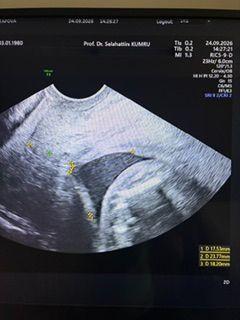
In diagnosing cervical insufficiency, the patient's history is often crucial. This history may include painless miscarriages in the second trimester or previous surgical interventions on the cervix. Regardless of this history, if a shortened cervical length is measured via transvaginal ultrasonography during a prenatal examination, and there are no uterine contractions, this finding confirms the diagnosis of cervical insufficiency. For these reasons, cervical length measurement via transvaginal ultrasonography is necessary during prenatal examinations, along with examination of the fetus and placenta. In this measurement, a cervical length shorter than 25 mm, especially between weeks 24-28 of pregnancy, is a strong indicator of cervical insufficiency and points to a stage requiring management.
Transvaginal ultrasonography image of a short cervix and funneling diagnosed and managed in our clinic.
How is Cervical Insufficiency Treated?
There are multiple treatment options for pregnant women with cervical insufficiency. Pregnant women with a history suggestive of cervical insufficiency can be managed with medical treatment from the beginning of pregnancy, with periodic monitoring to check for cervical shortening. If shortening occurs despite medication, surgical treatment (cerclage) will be considered. Another alternative for pregnant women with a history of cervical insufficiency is to perform a cerclage procedure to the cervix after the first trimester. Pregnant women without a definitive diagnosis of cervical insufficiency are evaluated for shortening using transvaginal ultrasonography during the second trimester, especially between weeks 24-28, just like all other pregnant women. Those with detected shortening are then treated according to the measured value and other parameters. If the cervix is completely shortened and opened, and the fetal membranes are visible during examination the surgery (serclage) is an urgent treatment option. At this stage that urgent surgery is necessary, the chances of success are only for those with shortening or those diagnosed based on their history, the success rate is lower than that of 12 weeks of pregnancy. Roughly speaking, the success rate of cerclage is over ninety percent in pregnant women diagnosed based on history around the 12th week of gestation, while in those who undergo cerclage at a later stage due to cervical shortening, the success rate is 75-80 percent, and the membranes are visible during examination when the cervix is dilated and the membranes is observed by examination the success rate is percentage almost 50 percent
Are there any risks associated with cervical cerclage?
Cerclage is ultimately a surgical procedure and carries some risks. While there may be some complications related to anesthesia (regional or general), there are also minimal risks associated with the cerclage procedure itself, such as bleeding, infection, and rupture of the baby's membranes causing amniotic fluid to leak.
Diagnosing and treating cervical insufficiency, a cause of premature birth, can reduce both recurrent miscarriages and prematurity. Measuring the cervix with transvaginal ultrasonography during routine pregnancy checkups, even before the cervix opens, can also be a vital approach for diagnosis and management.