Blog
My Baby Has Been Diagnosed with PUV/LUTO: What Happens Next?
Prof. Dr. Selahattin Kumru
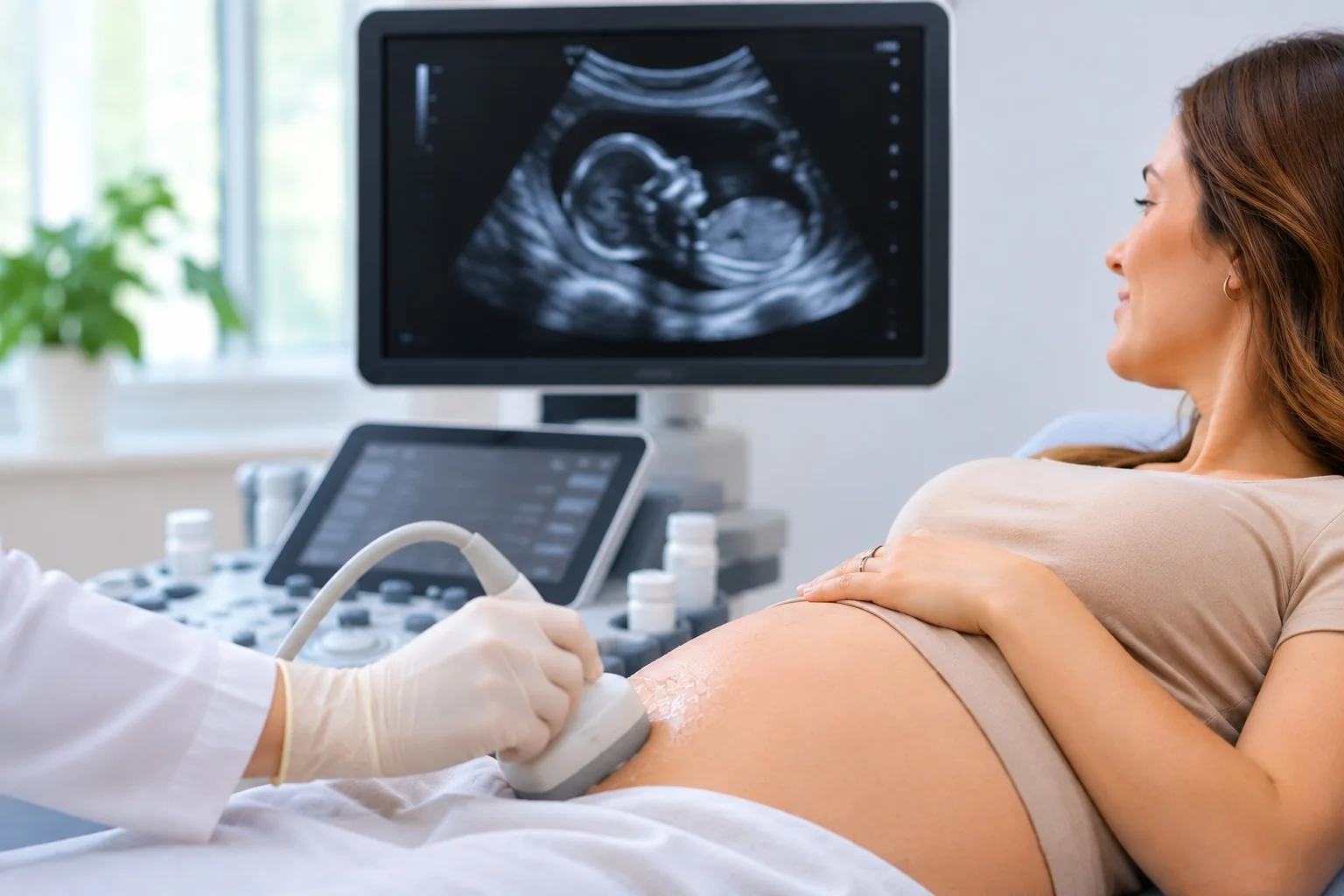
Ultrasonography during pregnancy showing that the baby's bladder is larger than normal, dilation in the kidneys or urinary tract, or a decrease in amniotic fluid suggests that there may be an obstruction in the baby's urinary tract. One such condition is called lower urinary tract obstruction (LUTO). In male babies, one of the important causes of LUTO is a congenital obstruction called posterior urethral valves (PUV).
A suspicion or diagnosis of PUV/LUTO can be worrying for families. However, the course of the condition is not the same in every baby. In some babies the obstruction may be partial and the pregnancy can continue with close monitoring, whereas in more severe cases fetal therapy options in the womb may be considered to preserve lung development and increase the baby's chance of survival.
Therefore, when PUV/LUTO is detected, the first question should not simply be “Can it be treated?” First, the severity of the obstruction, the status of the amniotic fluid, whether the kidneys are affected, and the baby's overall development should be evaluated in detail. In addition, because the likelihood of chromosomal abnormalities is higher in LUTO cases than in the normal population, genetic testing should also be discussed.
What Is LUTO?
LUTO is the general term for obstructions that occur in the baby's lower urinary tract and partially or completely prevent urine from leaving the bladder.
Urine produced in the baby's kidneys reaches the bladder through tubes called ureters. Urine that accumulates in the bladder is then expelled through the urethra and becomes part of the amniotic fluid. After the second trimester of pregnancy, almost all of the amniotic fluid consists of the baby's urine.
When there is a severe obstruction in the lower urinary tract, urine has difficulty leaving the bladder. As a result, the bladder enlarges, dilation occurs in the urinary tract and kidneys, and over time, while the amniotic fluid—which plays a vital role in the baby's lung development—decreases, kidney tissue is also damaged.
What Is PUV? Is It the Same as LUTO?
PUV and LUTO do not mean the same thing.
LUTO is a general term describing obstruction in the lower urinary tract. Posterior urethral valves (PUV), on the other hand, are a congenital tissue structure in the posterior part of the urethra in male babies that obstructs urine flow.
Therefore, PUV is one of the conditions that can cause LUTO.
There may also be other causes of lower urinary tract obstruction. Therefore, findings suggestive of LUTO on ultrasound during pregnancy do not always mean that PUV is definitely present.
Evaluation of the definitive diagnosis and the cause of the obstruction begins with detailed examinations during pregnancy and, in some cases, is clarified by fetal cystoscopy performed while the baby is still in the womb (evaluation by entering the baby's bladder with a camera) or by urological assessments after birth.
How Is PUV/LUTO Detected on Ultrasound?
PUV/LUTO is mainly detected during ultrasonographic examinations performed during pregnancy.
One of the notable ultrasonographic findings is that the baby's bladder is larger than normal. This condition is called fetal megacystis.
Depending on the degree of obstruction, ultrasonography may show:
- Marked enlargement of the bladder,
- Thickening of the bladder wall,
- Dilation of the ureters,
- Dilation or structural changes in the kidneys,
- Decreased amniotic fluid
findings such as these may be observed.
In some cases, simultaneous dilation of the bladder and part of the urethra may create a characteristic appearance on ultrasonography. Ultrasonographic findings are important not only for identifying the condition but also for assessing the extent to which the obstruction affects the baby.
Does an Enlarged Bladder in the Baby Always Mean PUV/LUTO?
No. Seeing an enlarged bladder on ultrasound alone is not sufficient to diagnose PUV or severe LUTO.
The course of bladder enlargement detected especially in early pregnancy may vary. In some cases the bladder may return to normal size at later follow-up examinations, while in others the enlargement persists and other findings suggestive of lower urinary tract obstruction appear.
Therefore, rather than relying on a single ultrasound image, the appearance of the bladder over time, the condition of the kidneys, the urinary tract, and the amniotic fluid are evaluated together.
Why Is PUV/LUTO Important?
The problem caused by LUTO is not limited to the baby being unable to pass urine.
A severe and prolonged obstruction can affect two important systems:
Kidneys
Urine that cannot leave the bladder can increase pressure in the urinary tract. This pressure can reach the kidneys and damage kidney tissue.
The degree of kidney damage may also affect the baby's kidney function after birth. Therefore, during evaluation, particular attention is paid not only to the size of the bladder but also to the ultrasonographic appearance of the kidneys.
Lungs
Especially in the second half of pregnancy, a significant portion of the amniotic fluid consists of urine produced by the baby.
If urine cannot adequately reach the amniotic cavity because of severe LUTO, the amount of amniotic fluid may decrease markedly. Prolonged and severe reduction in amniotic fluid can prevent normal lung development and lead to underdevelopment of the lungs, known as pulmonary hypoplasia. If the reduction in amniotic fluid is severe, compression of the baby's umbilical cord may create a life-threatening situation and may also increase the risk of deformities of the face and extremities (hands and feet).
Therefore, in severe LUTO cases, the primary focus of assessment is maintaining the baby's lung development (preventing a decrease in amniotic fluid). There are insufficient data to show that interventions performed in the womb protect the baby's kidneys in the long term.
What Examinations Are Performed When PUV/LUTO Is Diagnosed?
When PUV/LUTO is suspected, the first aim is to evaluate the severity of the condition and the baby's status in as much detail as possible.
Detailed ultrasonography evaluates:
- The size and wall structure of the bladder,
- The appearance of the kidneys,
- Whether the ureters are dilated,
- The amount of amniotic fluid,
- The baby's growth and development,
- Whether there are other accompanying structural abnormalities,
- Whether chromosomal abnormalities are present together with LUTO
are evaluated.
Depending on the case, additional assessments such as fetal echocardiography, genetic testing, or fetal MRI may be required.
In selected cases, an ultrasound-guided urine sample may need to be taken from the baby's bladder (vesicocentesis) to assess whether fetal therapy is appropriate. Whether such advanced assessments are necessary is decided according to the characteristics of the baby and the pregnancy.
Is Every PUV/LUTO Case Treated in the Womb?
No. A diagnosis of PUV/LUTO does not mean that the baby will necessarily undergo an intervention in the womb.
In some cases where the obstruction is partial, the amniotic fluid remains normal, and there are no signs of severe kidney damage, the pregnancy may be monitored with regular ultrasonographic examinations.
Fetal intervention is considered mainly in selected cases where the obstruction is severe and the baby's lung development is at risk because of reduced amniotic fluid.
The key question here is not simply “Is there an obstruction?” What must be assessed is whether an intervention in the womb can meaningfully improve the baby's expected outcome.
How Can PUV/LUTO Be Treated in the Womb?
One of the methods that can be used in selected LUTO cases considered suitable for fetal therapy is placement of a vesicoamniotic shunt.
What Is a Vesicoamniotic Shunt?
A vesicoamniotic shunt is a thin tube that allows urine in the baby's bladder to drain into the amniotic cavity.
The procedure is performed under ultrasonographic guidance. One end of the shunt is placed in the baby's bladder and the other end remains in the amniotic cavity. In this way, the lower urinary tract containing the obstruction is temporarily bypassed, allowing the bladder to empty. During the procedure, the mother receives anesthesia, and the baby is also given anesthesia and muscle-relaxant medications.
One of the important aims of shunt placement is to help restore amniotic fluid and thereby support lung development in particular.
However, the shunt does not directly eliminate the valve causing PUV. Therefore, a vesicoamniotic shunt and definitive urological treatment after birth are different treatments.
Can Fetoscopic Treatment Be Performed?
In some fetal therapy centers, direct fetoscopic intervention on the obstruction may be considered in selected patients. The advantage of fetoscopic treatment over a vesicoamniotic shunt is that it provides the opportunity to enter the baby's bladder and observe it directly, to determine whether the problem causing LUTO is PUV or urethral atresia or narrowing (stenosis), and, if the problem is indeed PUV, to perform laser ablation. If fetal cystoscopic laser treatment is successful in PUV cases, it provides an opportunity to perform before birth the operation that would otherwise be performed after birth. In this respect, it has an advantage over vesicoamniotic shunt placement. Its requirements include advanced medical equipment, a team trained in performing the procedure, and hospital conditions suitable for this operation.
Whether a vesicoamniotic shunt or fetal cystoscopic laser is used, the primary aim of procedures performed for PUV is to prevent a decrease in amniotic fluid and help the baby survive. These procedures are not performed for the purpose of preventing kidney damage, because every obstruction will cause kidney damage to a greater or lesser extent, and there are no definitive data showing that these procedures protect babies from dialysis or the need for kidney transplantation later in life; nearly half of these babies will require dialysis. In addition, the success rate of the operations is around 75%, and complications such as failure of the operation, loss of the baby, the need to repeat the procedure (especially because of displacement or blockage of the shunt), and damage to surrounding tissues during laser procedures are issues that should also be discussed before the operation.
Does Treatment in the Womb Completely Prevent Kidney Damage?
Not always.
One of the important aims of fetal therapy in PUV/LUTO is to reduce pressure in the urinary tract and support lung development by preserving amniotic fluid. However, when the obstruction is detected, it may not always be possible to completely reverse kidney damage that has already developed.
Therefore, the existing condition of the kidneys is important when evaluating the potential benefit of fetal therapy.
The success of treatment is not assessed only by whether the shunt works or the bladder becomes smaller. The baby's lung development, the possibility of preserving kidney function, and the expected condition after birth should be considered together.
Are There Risks Associated with a Vesicoamniotic Shunt?
Yes. Although a vesicoamniotic shunt is a minimally invasive fetal intervention, it is not completely risk-free.
Complications related to the procedure may include rupture of membranes, preterm birth, bleeding, infection, or pregnancy loss. The shunt may also become displaced, blocked, or lose its function, and repeat intervention may be required in such cases.
Therefore, when deciding on shunt placement, the potential benefit of the procedure and the risks it carries for the mother and baby are evaluated together.
How Is Pregnancy Monitored After a PUV/LUTO Diagnosis?
Regular monitoring throughout pregnancy is important after a diagnosis of PUV/LUTO.
Although the frequency of follow-up varies according to the severity of the condition, ultrasound examinations particularly assess:
- The amount of amniotic fluid,
- The appearance of the bladder,
- Changes in the kidneys,
- Dilation of the urinary tract,
- The baby's growth and overall condition
are evaluated.
In pregnancies in which fetal intervention has been performed, the effectiveness of the procedure and possible complications are also monitored. For example, in a baby with a shunt, it is checked whether the shunt remains in place and whether the bladder is emptying adequately.
The timing of delivery and the characteristics of the center where the delivery will take place are also planned according to the baby's anticipated needs after birth.
What Happens After Birth in a Baby with PUV/LUTO?
Follow-up for PUV/LUTO does not end with birth.
After birth, the baby's kidney and bladder functions need to be evaluated and the cause of the obstruction needs to be confirmed. Pediatric urology and pediatric nephrology assessments may be important during this process.
In babies in whom PUV is confirmed, the valves causing the obstruction can be opened endoscopically, a procedure known as valve ablation. In some cases, different surgical methods may be required to allow urine to drain freely from the bladder.
Kidney function is monitored after birth and throughout childhood. Depending on the severity of the condition, some children may require long-term urological or nephrological follow-up.
Therefore, fetal therapy performed in the womb is often not the entire treatment process; rather, it is one part of a comprehensive treatment plan extending from the prenatal period to after birth.
What Questions Should Families with a PUV/LUTO Diagnosis Ask?
When PUV/LUTO is diagnosed, it is important for families to understand not only the name of the condition but also its severity in their own baby and its expected course.
The answers to the following questions are particularly important during the physician's assessment:
- What is the degree of the obstruction?
- Are there any findings suggesting kidney damage?
- Is the amniotic fluid normal?
- Is the condition progressing?
- Is there another accompanying abnormality?
- Genetic testing?
- Is my baby a suitable candidate for fetal intervention?
- What is the expected course of the condition if no intervention is performed?
- What benefit could fetal therapy provide for my baby?
- What are the risks of the procedure for the mother and baby?
- What treatments might my baby need after birth?
The clinical condition of two babies with the same diagnosis of PUV/LUTO can be quite different. Therefore, the treatment and follow-up plan should be individualized for each pregnancy.
Frequently Asked Questions
Does PUV Occur Only in Male Babies?
Posterior urethral valves are a congenital lower urinary tract obstruction seen in male fetuses. However, LUTO is not caused only by PUV; there may be other causes of lower urinary tract obstruction.
Can PUV/LUTO Damage the Baby's Kidneys?
Severe and prolonged obstruction can cause increased pressure in the kidneys and damage to kidney tissue. The degree of damage is not the same in every baby, and ultrasonographic findings are considered together with other assessments.
Is Normal Amniotic Fluid a Good Sign?
Normal amniotic fluid is one of the important findings suggesting that the baby's urine production and passage of urine into the amniotic cavity are continuing. However, the condition is not assessed solely according to the amniotic fluid; the bladder, kidneys, urinary tract, and the baby's overall condition should be evaluated together.
Does Every Baby Diagnosed with PUV/LUTO Receive a Shunt?
No. A vesicoamniotic shunt is considered only in selected cases that meet certain criteria. The severity of the obstruction, the condition of the kidneys, the amniotic fluid, gestational age, and accompanying abnormalities are important in the treatment decision.
Does Placing a Shunt in the Womb Completely Treat PUV?
No. The shunt aims to reduce the effects of the obstruction by allowing urine in the bladder to drain into the amniotic cavity; it does not eliminate the valve causing PUV. When PUV is confirmed after birth, the baby may need to be evaluated by pediatric urology and, when necessary, undergo treatments such as valve ablation.
Can a Baby Diagnosed with PUV/LUTO Be Delivered Vaginally?
The mode of delivery is not determined solely by the diagnosis of PUV/LUTO. The baby's condition, gestational age, accompanying problems, whether fetal intervention has been performed, and obstetric factors are evaluated together when planning delivery.
This content has been prepared for general informational purposes. PUV/LUTO diagnosis, follow-up, and treatment options should be evaluated individually, taking into account the baby's condition, kidney assessment, amniotic fluid, gestational age, and accompanying problems.